News
Table Of Content
Solana-Based Blockchain Tech Sharing: Key Insights from Our Engineering Team
What Is Blockchain and How Does It Work?
What Makes Solana Blockchain Different?
Key Use Cases of Solana Blockchain
Understanding Token Types in Blockchain
Overview of the Current Blockchain Ecosystem
Key Insights from the Solana Tech-Sharing Session at S3Corp
Why Solana Knowledge Matters for Software Development Teams
S3Corp.'s Commitment to Ongoing Learning
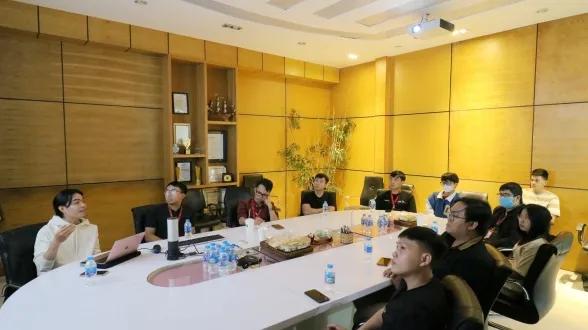
A deep dive from S3Corp's internal tech-sharing event covering Solana blockchain architecture, Proof of History, token types, and why this matters for software teams building tomorrow's applications.
03 Nov 2023
Yesterday, on Thursday, November 2, 2023, S3Corp. hosted an engaging tech-sharing session on "SOLANA-BASED BLOCKCHAIN." It was an excellent learning experience that left participants ready to put their newly gained knowledge to use.
It's critical to keep up with the latest developments in technology and to be knowledgeable in this always-changing field. S3Corp. is aware of this, and the tech-sharing event from yesterday demonstrated the company's dedication to ongoing learning and development.

The question used to be "should we pay attention to blockchain?" For most enterprise software teams today, that question has already been answered. The real question now is: which blockchain matters, and why?
At S3Corp, we regularly run internal knowledge-sharing sessions that bring our engineering teams up to speed on technologies shaping the global software landscape. Our most recent session focused on Solana-based blockchain — one of the most talked-about high-performance chains in the developer community — and the broader blockchain ecosystem surrounding it. This article distills the core learning from that session into a clear, practical guide.
This session covered how blockchain works at a structural level, how Solana differs from existing chains, and how token systems operate across decentralized platforms.
Before examining what makes Solana distinctive, it helps to understand the foundation every blockchain is built on. Most definitions are either too vague or too technical. Here is the middle ground.
A blockchain is, at its simplest, a chain of data blocks. Each block contains a set of transaction records, a timestamp, and — critically — a cryptographic hash of the previous block. That hash is a fixed-length digital fingerprint generated from the block's content. Change even a single character in a previous block, and its hash changes entirely, which invalidates every block that follows.
This creates a chain of interdependency. The blockchain architecture explained this way makes one thing obvious: tampering is not just difficult — it is practically traceable the moment it happens.
The distributed ledger aspect is equally important. Rather than storing this chain on a single server controlled by one entity, the ledger is replicated across thousands of nodes (computers) worldwide. Every participant holds a copy. Every transaction must be validated by the network before it is recorded.
In traditional systems — banking, identity verification, supply chain records — trust flows through a central authority. A bank confirms your balance. A government issues your ID. A company holds your purchase history.
Decentralized systems replace that single point of authority with a shared protocol. No one entity controls the ledger. Transactions are verified by the network following agreed-upon rules, not by a gatekeeper. This is not anarchy — it is a shift in where trust lives. Instead of trusting an institution, users trust the math and the consensus mechanism underlying the system.
For businesses operating across borders — particularly those dealing with cross-border payments, shared data records, or multi-party contracts — this architectural difference has meaningful practical implications.
Two properties make blockchain hard to compromise: immutability and consensus.
Immutability means records, once confirmed, cannot be altered without network-wide detection. Consensus mechanisms determine how the network agrees that a transaction is legitimate before writing it to the chain. The two most common are Proof of Work (used by Bitcoin, computationally expensive) and Proof of Stake (used by Ethereum post-merge, energy-efficient). Solana introduces a third layer — Proof of History — which we will cover shortly.
Together, immutability and consensus create a system where data integrity does not depend on trusting any individual actor. That is a significant shift for industries that currently rely on reconciliation processes, audits, and intermediaries.
There are dozens of blockchains in production today. Solana is not just another entry on that list. It was engineered from the ground up to solve a problem that most chains struggle with at scale: throughput.
Solana is a high-performance chain with a scalable architecture that distinguishes it from most Layer 1 blockchains. Where many chains process transactions sequentially — one after another — Solana is designed to handle thousands of transactions in parallel.
This is achieved through a combination of architectural innovations: Tower BFT (a consensus algorithm optimized for Solana's model), Turbine (a block propagation protocol that breaks data into smaller packets), Gulf Stream (a mempool-less transaction forwarding protocol), and Sealevel (parallel smart contract processing). Together, these components allow the network to operate at speeds that most chains cannot approach.
For development teams building applications that require real-time performance — trading platforms, gaming, payment infrastructure — this architecture is not a nice-to-have. It is a prerequisite.
Most blockchains face a synchronization problem. Nodes need to agree not just on what happened, but on when it happened. Coordinating time across a distributed network is expensive in both bandwidth and latency.
Solana's Proof of History (PoH) solves this by creating a cryptographic clock built directly into the blockchain. Rather than waiting for the network to agree on time, PoH generates a verifiable, sequential record of time — a historical proof that one event preceded another. Nodes do not need to communicate to agree on timing because the proof is already encoded in the chain itself.
This single innovation is why Solana can process transactions so much faster than most competitors. It removes a coordination bottleneck that other blockchains have not solved.
Solana TPS speed sits at a theoretical peak of 65,000 transactions per second, according to Solana's own documentation. In practice, real-world throughput under load has been significantly lower, but even at a fraction of that figure, Solana processes transactions faster than Ethereum, which handles roughly 15–30 TPS on its base layer.
More importantly for commercial applications: Solana transaction fees average a fraction of a cent — typically around $0.00025 per transaction. Compare that to Ethereum, where gas fees regularly spike to several dollars (and sometimes tens of dollars) during periods of high network congestion. For applications processing high volumes of micro-transactions, that difference fundamentally changes the economics of what you can build.
| |
Solana |
Ethereum |
|
TPS (theoretical max) |
~65,000 |
~15–30 |
|
Average transaction fee |
~$0.00025 |
$1–$50+ (variable) |
|
Consensus mechanism |
PoH + PoS |
PoS (post-merge) |
|
Smart contract language |
Rust, C, C++ |
Solidity |
|
Ecosystem maturity |
Growing |
Highly mature |
The trade-off is real. Ethereum has a significantly larger developer ecosystem, more established tooling, and deeper institutional adoption. Solana offers superior raw performance and lower operating costs, but has experienced notable network outages in its history — a consideration for any team building critical infrastructure.
The right choice depends on what you are building, not on which chain is currently trending on social media.
Understanding Solana's architecture only matters if it translates into practical application. These are the areas where Solana's advantages are most clearly demonstrated.
DeFi applications benefit from Solana's high throughput and low fees because decentralized finance platforms live and die on transaction speed. Platforms like Raydium and Serum are built on Solana specifically because Ethereum's gas fees make frequent, small-value trades economically unviable for users.
NFT platforms have found a natural home on Solana. Projects like Magic Eden rose to prominence as a Solana-native NFT marketplace, attracting creators and collectors who found Ethereum minting costs prohibitive. The ability to mint and trade NFTs for fractions of a cent changes who can participate in digital ownership markets.
Gaming is perhaps the most exciting frontier. Blockchain-based games require thousands of micro-transactions — item transfers, score updates, ownership changes — happening in near real-time. Solana's architecture makes on-chain gaming mechanics feasible where they would be economically impossible on slower, more expensive chains. This intersects directly with Mobile Application Development Services for teams building cross-platform gaming experiences.
Payment systems are increasingly looking at Solana as infrastructure for high-volume, low-cost settlement. The Solana Pay protocol, for instance, allows merchants to accept USDC payments with near-instant finality and negligible fees — a compelling proposition for e-commerce platforms in high-transaction-volume markets.
One of the most practically misunderstood areas of blockchain for non-technical business leaders is the token layer. Not all tokens work the same way, and the differences have direct implications for how you design products.
A fungible token is interchangeable with any other token of the same type. One unit of a fungible token is identical in value and function to any other unit. Think of it like currency: one dollar is worth the same as another dollar.
In blockchain terms, fungible tokens follow standards like ERC-20 on Ethereum or SPL tokens on Solana. They are used for cryptocurrencies, utility tokens (access to a platform feature), governance tokens (voting rights in a decentralized protocol), and stablecoins. For fintech applications — a space where Fintech Industry Solutions are increasingly in demand — fungible tokens are the foundation of payment rails and incentive systems.
Non-fungible tokens (NFTs) represent unique ownership of a specific item. The NFT meaning is straightforward: unlike fungible tokens, no two NFTs are identical. Each carries a unique identifier on the blockchain that verifiably establishes ownership and provenance.
The commercial applications extend well beyond digital art. NFTs can represent ownership of in-game assets, event tickets, music licenses, real estate records, supply chain certificates, and digital identity credentials. The value is not in the image or file attached — it is in the verifiable, tamper-proof record of who owns what.
Semi-fungible tokens sit between the two categories and are often overlooked in introductory discussions. They behave like fungible tokens up to the point of redemption, and then become non-fungible afterward.
The practical scenario is event ticketing. Before an event, ten tickets in Row C are interchangeable — any one is as good as another. Once the event passes, that specific ticket becomes a unique record — a memento with distinct metadata. Gaming items follow a similar pattern: a health potion before use is fungible; the sword carried by a specific character in a specific game session becomes unique through context. Token standards such as ERC-1155 on Ethereum formalize this hybrid behavior.
The blockchain ecosystem is no longer a niche developer experiment. It has matured into a multi-layered infrastructure with distinct segments competing and increasingly cooperating.
Major Segments: DeFi, NFTs, and Web3 Applications
The DeFi ecosystem overview covers a broad range of financial services — lending, borrowing, trading, insurance, yield generation — all operating through smart contracts without traditional financial intermediaries. According to DeFiLlama, the total value locked (TVL) across DeFi protocols has fluctuated significantly, but consistently represents tens of billions of dollars in activity, demonstrating genuine economic adoption beyond speculation.
The NFT market similarly matured through cycles of hype and correction, settling into more sustainable use cases around gaming, creator monetization, and enterprise applications around digital credentials and supply chain transparency.
Web3 applications form the broader application layer — decentralized social platforms, identity systems, data marketplaces, and governance tools. The Web3 ecosystem remains early but is developing quickly, particularly in markets like Southeast Asia and Latin America where trust in traditional institutions is lower and mobile-first adoption is high.
One of the most significant recent developments is the rise of cross-chain interoperability. Protocols like Wormhole (which connects Solana to other chains) allow assets and data to move across networks. This is significant because it means the blockchain ecosystem is evolving from isolated silos into interconnected infrastructure — more like the internet's layered protocol stack than a collection of competing monoliths.
For development teams, this has practical consequences. Building exclusively on one chain is becoming less necessary. Choosing a primary chain for performance and cost, while designing for interoperability, is increasingly the strategic approach taken by experienced engineering teams. This architectural decision-making process is exactly the kind of challenge that software outsourcing services partners can help navigate systematically.
The session was not a lecture — it was a technical sharing. Engineers across different practice areas at S3Corp contributed perspectives from their own project experience, and that cross-functional dialogue produced a few insights worth sharing directly.
The most consistent takeaway was this: Solana's performance advantages are real, but they require more developer expertise to unlock. Working in Rust (Solana's primary smart contract language) has a steeper learning curve than Solidity on Ethereum, which means team capability is a genuine factor in choosing this chain. Our team also discussed how network reliability history needs to be factored into any production architecture decision — especially for applications where downtime is commercially unacceptable.
The discussion on token standards led to a practical conversation about how Blockchain Industry Solutions are increasingly requiring teams to understand token economics, not just technical implementation. Product decisions and smart contract design are inseparable.

This is the "so what" question. And it deserves a direct answer.
Faster applications are now achievable on-chain. For product managers who previously ruled out blockchain because of poor user experience (slow confirmations, high fees), Solana changes the calculus. Features that were previously only possible in centralized architectures are now viable on-chain.
Cost efficiency opens new business models. When transaction fees drop from dollars to fractions of a cent, entirely new product categories become economically viable — micro-subscription models, in-game economies, pay-per-use data access, streaming payments. Teams building on Web Application Development Services platforms can now consider on-chain payment rails that were previously impractical.
New product opportunities emerge at the intersection of Web3 and existing digital products. The most commercially significant blockchain applications in the next five years will likely not be pure crypto-native products. They will be hybrid applications — existing SaaS platforms, mobile apps, and enterprise tools that integrate on-chain components for specific functions like ownership verification, payment settlement, or data provenance. Teams with deep Full-Lifecycle Application Development experience are best positioned to design these integrations correctly from the architecture stage.
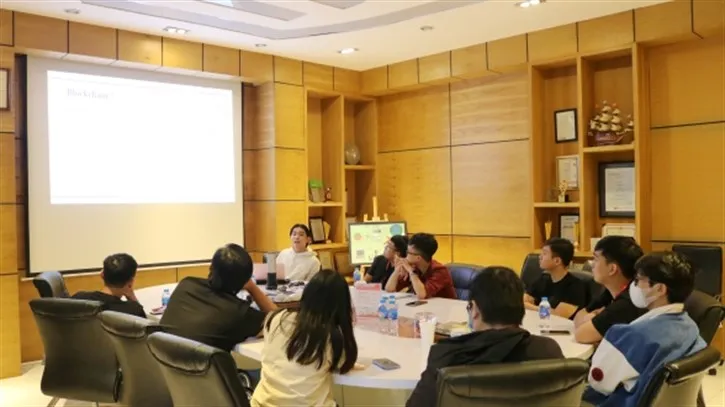
One of S3Corp.'s primary values is the belief in cultivating a culture of ongoing learning and growth. We believe that cultivating this culture is critical to realizing the full potential of our employees and also providing high-quality software development services to our clients. Therefore, the tech-sharing session on blockchain based in Solana was just one of the numerous actions that S3Corp. took to give our employees the resources and expertise they require to be successful.
The event finished with heartfelt gratitude to all attendees and a particular note of appreciation for the host. We hope that our development team will be more able to advance their abilities and use them in their regular work with the knowledge they will acquire from this session.
The tech-sharing event clearly produced a lot of passion, and S3Corp. is excited to see how it can help the team in their future projects.
S3Corp's "SOLANA-BASED BLOCKCHAIN" tech-sharing event was a success, demonstrating the company's commitment to learning. The event gave attendees insightful knowledge about blockchain technology and the possibilities of the Solana chain. Thank you to all of the participants. S3Corp. hopes that the information they have learned will help their team succeed in the future. This dedication to learning positions S3Corp. as a leader in the ever-changing world of technology.

Whether you have any questions, or wish to get a quote for your project, or require further information about what we can offer you, please do not hesitate to contact us.
Contact us Need a reliable software development partner?
S3Corp. offers comprehensive software development outsourcing services ranging from software development to software verification and maintenance for a wide variety of industries and technologies





Software Development Center
_1746790956049.webp&w=384&q=75)
_1746790970871.webp&w=384&q=75)