Whether you have any questions, or wish to get a quote for your project, or require further information about what we can offer you, please do not hesitate to contact us.
Contact us Need a reliable software development partner?
S3Corp. offers comprehensive software development outsourcing services ranging from software development to software verification and maintenance for a wide variety of industries and technologies





Software Development Center






Insights
Table Of Content
Key Takeaways
Why does the open banking API rulebook matter to your roadmap in 2026?
Which open banking rules apply to your role at a glance?
What is an open banking API, and who sits on each side of it?
What does open banking architecture look like for a financial business?
What are the business opportunities of open banking APIs?
How does an account aggregation product work as a business?
What are the main risks of open banking for a financial business?
Which open banking rules apply to your business in 2026?
How do you prepare for open banking compliance? A readiness checklist by team
What should you consider before you build open banking software?
FAQs
Recap and next step
An open banking API is a regulated channel for sharing customer-permitted bank data. This guide maps opportunities, risks, and 2026 rules by role and region for banks, fintechs, and data users.
11 Nov 2026
An open banking API (application programming interface) is a regulated channel for sharing customer-permitted bank data and payment instructions with licensed third parties. Relevant account providers often carry a legal duty to offer it. Fintechs and data users gain a growth channel, and your role and region decide which compliance and operational risks you own.
One regulatory date can break a product roadmap, and 2026 has produced several. A US court kept a federal data-sharing rule on hold. EU institutions settled the texts that will replace the second Payment Services Directive (PSD2).
Meanwhile, the UK passed one billion open banking payments. Do you lead engineering or product at a bank, lender, fintech, or software-as-a-service (SaaS) platform? Then one question matters most: which of these rules bind you?
This guide answers that question by role and region, with status as of November 2026. You will see where the commercial value sits, how an account aggregation product turns rules into daily work, and which risks need owners. You will also get a readiness checklist for your next planning meeting.
The EU replacement package has two parts: the third Payment Services Directive (PSD3) and the Payment Services Regulation (PSR). The guide covers business, risk, and regulation, and it treats open banking architecture only at the planning level.
Scoping an open banking project and need a technical partner?
Four roles cover most readers. Find yours in Table 1, then read the matching sections below.
| Your role | Is it mandatory? | Status to know (November 2026) |
|---|---|---|
| Payment account provider in the EU or the UK | Yes. PSD2 applies in the EU, and the Payment Services Regulations 2017 apply in the UK. The CMA9 also meet the CMA Order standards. | PSD2 remains in force. The Council adopted its PSD3 and PSR position on 29 October 2026, and Parliament's second-reading vote is pending. |
| Fintech or other third-party provider that offers an account information service (AIS) or a payment initiation service (PIS) | Participation is a business choice. Regulated AIS or PIS activity may need authorization or registration, depending on jurisdiction and business model. | In June 2026, Open Banking Limited (OBL) listed 327 UK regulated providers, including 239 third-party providers. |
| US bank or lender | No enforceable federal mandate today. | The Consumer Financial Protection Bureau (CFPB) issued the final rule in October 2024. A court enjoined enforcement, and the CFPB is reconsidering the rule. |
| Business that uses bank data through an aggregator | No duty to open data. Your duties cover consent, purpose, and data protection. | Your duties depend on the aggregator's authorization and your jurisdiction. |
With an ISO 27001-certified delivery process, S3Corp builds security and intellectual property protection into the engagement from day one.
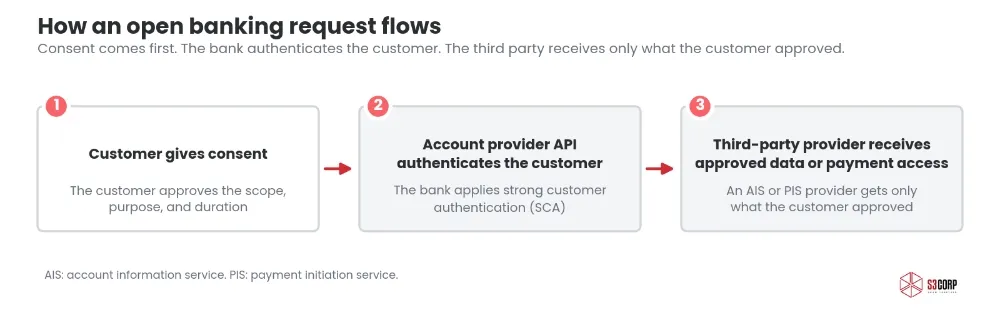
An open banking API is the regulated interface between an account provider, usually a bank, and a third party the customer has authorized. The account provider exposes account data and payment functions. The third party consumes them.
Customer consent and strong customer authentication (SCA) sit between the two. Open APIs in banking replaced screen scraping, where a third party logged in with the customer's own credentials.
Four parties appear in almost every open banking flow:
Many implementations use a bank-hosted authorization redirect based on the applicable open banking standard and security profile. The customer leaves the third-party app, signs in at the bank, approves the request, and returns. In a properly built flow, the third party does not receive the customer's bank login credentials.
Open banking and open finance differ in scope. Open banking covers payment accounts. Open finance extends consent-based sharing to savings, investments, pensions, mortgages, and insurance.
These are general market definitions, and the legally covered products and data categories vary by jurisdiction. The EU proposal for open finance, the Financial Data Access (FiDA) regulation, remains in the legislative process.
Open banking architecture has three layers. Bank APIs sit at the bottom, a connectivity layer sits in the middle, and your product sits on top. Your product layer holds the consent, data, and security services.
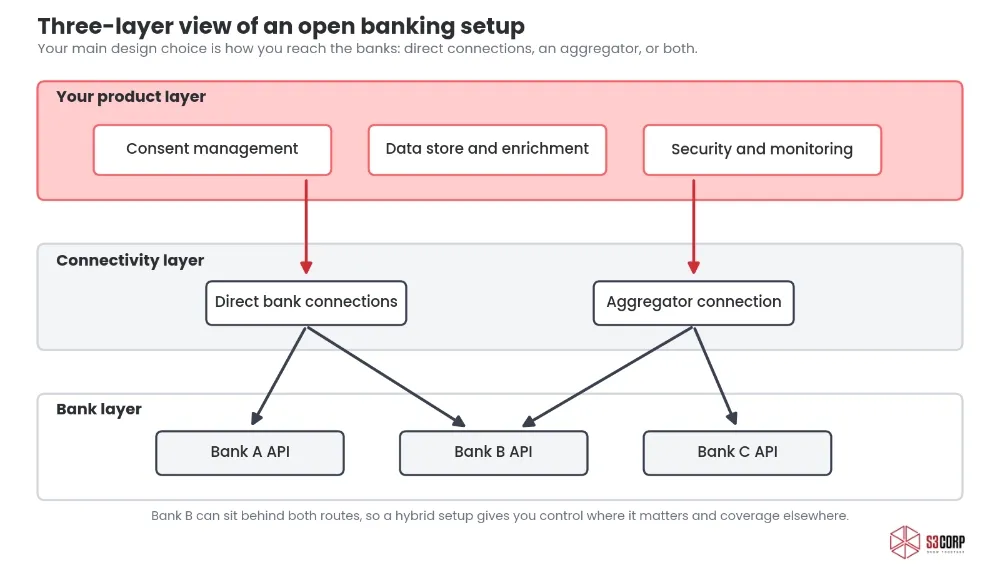
Your main design choice is how you reach the banks. You can connect to each bank directly, use an aggregator that has already built the connections, or combine both. Table 2 compares the three routes on business criteria.
| Route | Where it fits | Trade-offs for your business |
|---|---|---|
| Direct bank connections | You depend on a few banks and want full control over the customer journey and the data. | You own each connection, its testing, and its changes. Coverage grows one bank at a time. |
| Aggregator | You need many banks quickly, or you serve several countries. | You depend on the aggregator's coverage, uptime, and authorization. Pricing follows the aggregator's model. |
| Hybrid | You have a few strategic banks and a long tail of others. | You gain control where it matters and coverage elsewhere, but you run two integration paths. |
Three product decisions follow from your route:
The route also changes your compliance scope. Regulated activity may need authorization, or you may work through an authorized provider, as Table 1 shows.
Open banking APIs create value in three places. Account-to-account payments may become cheaper and faster, lending gets richer data, and banks gain new partnership revenue. Which one matters depends on your role.
The UK shows the scale. OBL's September 2026 analysis, published on the Open Banking Limited site, reports these results:
The pattern is useful for planning. Data access built the base, and payments now grow faster, so a pay-by-bank roadmap rests on proven traffic.
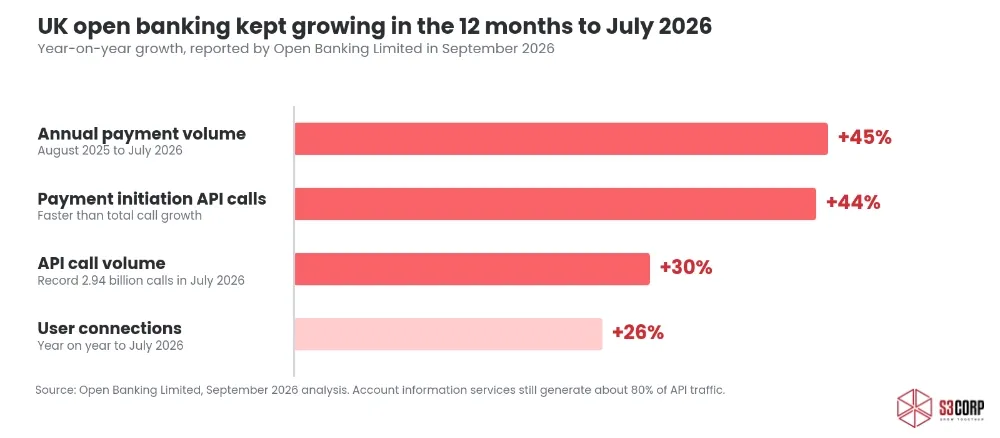
Table 3 maps five use cases to the roles that benefit and to the rules that apply. These use cases give your team innovative solutions to test, but they do not guarantee a payoff for every business.
| Use case | Who benefits, and why | Data or action, and the regulatory touchpoint |
|---|---|---|
| Pay-by-bank checkout | Fintechs, merchants, and SaaS platforms may gain lower cost and faster settlement, which you should test per provider. | A PIS provider, or a partner in that role, must hold authorization, and the payment needs SCA. |
| Variable recurring payment (VRP) billing | Billers, lenders, and subscription platforms may improve collection and conversion. | The UK Payments Initiative (UKPI) launched its commercial VRP scheme on 2 June 2026, and the Financial Conduct Authority (FCA) welcomed it. |
| Credit decisioning from transaction data | Lenders can run affordability checks on real transaction history. | An AIS provider needs consent, purpose limits, and General Data Protection Regulation (GDPR) compliance. |
| Accounting reconciliation | SaaS platforms and small businesses automate bank feeds and cut manual matching. | In the EU, a qualifying SCA exemption can allow renewal intervals of up to 180 days. |
| Bank partnerships and ecosystem revenue | Banks earn new revenue through partners and embedded finance. | The bank exposes the API under PSD2, and any commercial agreement goes beyond the regulated minimum. |
Cost and conversion claims vary by provider and market. Treat any figure labeled vendor-reported as a hypothesis, then test it against your own volumes.
Pay-by-bank rarely replaces card acceptance outright. Most teams run it beside a current payment gateway integration and plan settlement and reconciliation across both routes. Faster account-to-account settlement also changes retry logic and cut-off times in your real-time payments architecture.
Commercial VRP has a practical limit today. UKPI launched Wave 1 for regulated and trusted sectors, and industry sources expect general e-commerce in Wave 2 during the second half of 2026.
Credit teams get a different benefit. A lender that adds transaction data to underwriting treats it as one input inside its wider lending platform development, not as a separate product.
Many modern fintech tools reach banks through an aggregator. Larger platforms add direct connections for their top banks, so open banking API integration becomes a coverage and cost decision.
An account aggregation product connects a customer's accounts from several banks into one view. It then earns revenue from the insight or service built on that data. Each stage, from consent to enrichment to storage, carries its own obligation and failure mode.
Consider an illustrative scenario, not a client story. A cash-flow tool for small businesses links accounts at three banks, categorizes six months of transactions, and sends an affordability summary to a lender partner.
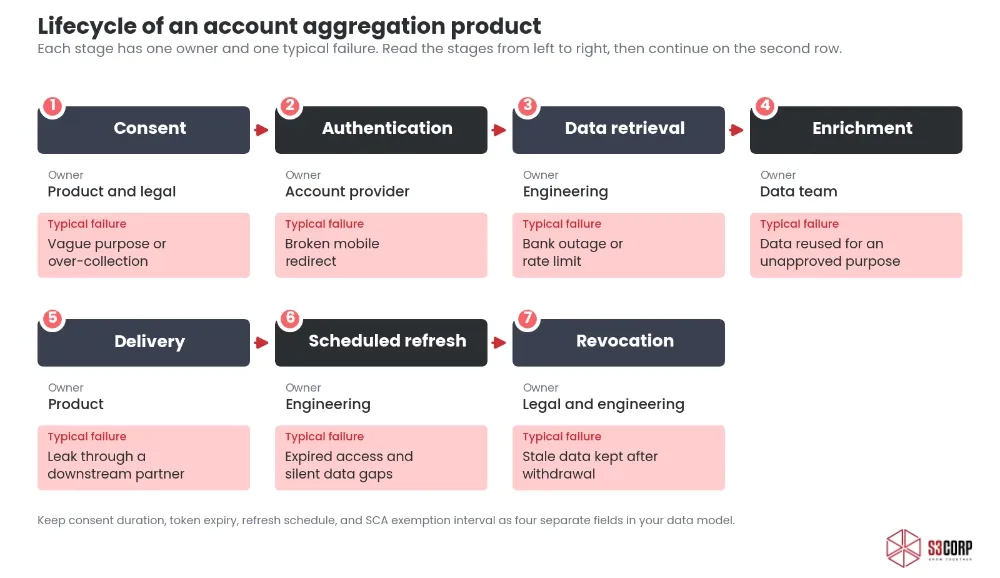
Every stage in that chain needs one owner. Table 4 shows who owns each stage, which rule applies, and where it usually breaks.
| Stage and owner | What happens | Regulatory touchpoint and typical failure |
|---|---|---|
| 1. Consent, owned by product and legal | The customer approves scope, purpose, and duration. | Consent text must match actual data use. A vague purpose or over-collection breaks this rule. |
| 2. Authentication, owned by the account provider | The bank authenticates the customer with SCA. | PSD2 sets the SCA rules. A broken mobile redirect drops users here. |
| 3. Data retrieval, owned by engineering | The aggregator or provider calls the bank API with an access token. | Bank outages and rate limits stall retrieval. |
| 4. Enrichment, owned by the data team | The product categorizes transactions and cleans merchant names. | Data minimization and purpose limits apply. Reusing data for an unapproved purpose breaks them. |
| 5. Delivery, owned by product | Insights reach the app, lender, or accountant. | Data protection law, such as the GDPR, applies. A downstream partner can leak data. |
| 6. Scheduled refresh, owned by engineering | Tokens renew, and the customer re-authenticates when required. | SCA exemption intervals apply where they qualify. Expired access creates silent data gaps. |
| 7. Revocation, shared by legal and engineering | The customer withdraws consent. | Stop access and processing that depend on consent. Then delete, restrict, or retain records as applicable law requires. |
Keep four fields separate in your data model, because they describe different things:
The European Banking Authority (EBA) amended the SCA exemption for account access. Under the EBA technical standards, a qualifying exemption can allow renewal intervals of up to 180 days. That interval does not equal consent validity, so confirm the conditions with your legal team before you build refresh logic.
Aggregators earn revenue in three common ways:
Engineering teams also balance data freshness against bank API limits, which is a matter of optimizing cost and performance. One recommended architecture pattern is a scalable architecture that keeps consent storage, token refresh, and enrichment as separate services. Splitting services isolates failures but adds cost to run, so size the design to your load and risk.
Consent storage and encryption belong with your wider data security controls. S3Corp documents a related data-protection project in its data loss prevention case study.
The main risks are regulatory change, consent and data-protection failures, fraud on payment journeys, dependence on bank API reliability, and security exposure through third parties. Each risk is manageable with a named owner and an early-warning signal. Treat them as operational risks that need a standing review, not as a one-time compliance project.
Table 5 gives you a register you can paste into your own risk process.
| Risk | Where it shows up, and what to watch | Suggested owner |
|---|---|---|
| 1. Regulatory change | PSD3, the PSR, the Section 1033 reconsideration, and the UK future entity can change your duties. Watch for Official Journal and Federal Register notices. | Legal and compliance |
| 2. Consent and data protection | Over-broad consent and data kept after revocation create exposure. Watch for higher revocation rates and complaints about data use. | Data protection officer, with product |
| 3. Payment fraud | Scams on pay-by-bank journeys raise losses. Watch for fraud rates that rise above your baseline. | Fraud and risk team |
| 4. Bank API availability and change | Outages and version changes break retrieval. Watch for error rates and latency that drift from published benchmarks. | Engineering |
| 5. Third-party compromise | A breach at an aggregator or vendor can reach provider systems. Watch for expired attestations and vendor security alerts. | Security |
| 6. Cost uncertainty | The CFPB reopened the question of US data-access fees. Watch for fee language in new proposals and bank notices. | Finance and product |
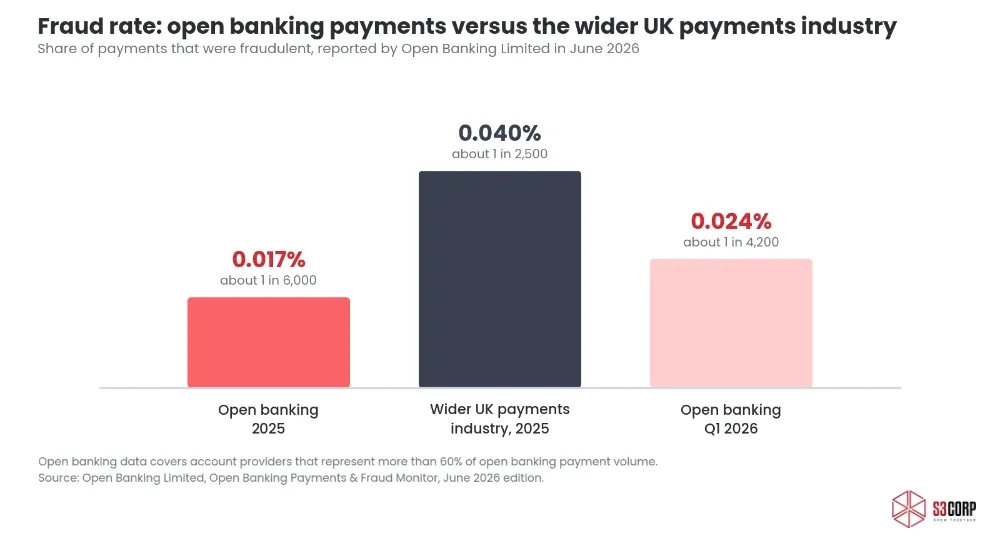
Fraud data gives you a baseline. OBL's June 2026 fraud monitor, as reported by Payments Industry Intelligence, found that roughly one in 6,000 UK open banking payments was fraudulent in 2025. The wider UK payments industry saw about one in 2,500.
The monitor also shows fraud at 0.024% of payments in the first quarter of 2026. Authorised push payment (APP) fraud makes up more than two-thirds of reported cases, so focus your controls there. Teams often pair that focus with artificial intelligence (AI) fraud detection on the payment journey.
The data covers providers that handle more than 60% of UK open banking payment volume. Read it as a strong sample, not a census.
API reliability is the second measurable risk. OBL's June 2026 API performance data showed 99.35% unweighted availability, 99.80% weighted availability, a 349 ms average response time, and 99.50% successful calls.
The gap between weighted and unweighted availability matters to you. It means the headline average can hide weaker endpoints at individual banks. Pull the latest month before you set service targets.
Certificates add a quieter operational risk. EU providers authenticate to banks with qualified certificates, and a certificate works like a passport: it stops working the day it expires.
A missed renewal stops API calls, so assign an owner and an alert to every renewal date.
Automating monitoring and reporting cuts the manual effort behind this register and gives auditors a clear trail.
Need extra engineering capacity for open banking work?
Open banking access is mandatory for relevant account providers in the EU and for all UK providers of online payment accounts. In the US, a court has enjoined the federal rule and the CFPB is reconsidering it, so participation is largely market-led. Regulated third-party providers in the EU and UK need authorization or registration, or they work through an authorized provider.
In the EU, the UK, and Australia, relevant account providers must open access to customer data. The US has no enforceable mandate, and Singapore relies on voluntary collaboration. Check each status in Table 6 against the date at the top of this guide, because these rules move.
| Region and regime | Who is obligated, and current status | What to do now |
|---|---|---|
| EU: PSD2 | Relevant account servicing providers must offer the access PSD2 requires, and PSD2 stays in force. The Council published its PSD3 and PSR first-reading position on 23 October 2026. It formally adopted the position on 29 October 2026, according to the Council of the EU. Parliament's second-reading vote is pending. | Confirm your authorization route. Plan for the PSR, which applies 21 months after entry into force. |
| UK: Payment Services Regulations 2017 and CMA Order | All UK providers of online payment accounts must give authorized third parties access under the Payment Services Regulations 2017. The CMA9 also meet the CMA Order standards. The FCA regulates payment services providers, and OBL maintains the standards and publishes performance data without acting as a regulator or licensing body. | Confirm your FCA authorization status. Check the current Open Banking Standard and each bank's supported API version. |
| US: Section 1033 | The CFPB finalized the rule in October 2024, and it took effect in January 2025. A federal court enjoined enforcement on 29 October 2025, and the CFPB is reconsidering the rule, as Cozen O'Connor explains. | Do not plan around the original compliance dates. Data sharing continues through market-led arrangements, including the Financial Data Exchange (FDX) standard. |
| Australia: Consumer Data Right (CDR) | Banks share data with accredited recipients. Designated non-bank lenders joined the CDR in July 2026, and consumer data sharing starts in stages from 9 November 2026, according to the CDR program. | Check the accreditation path if you want to receive data, and check the staged dates if you lend. |
| Singapore: voluntary framework | No single law mandates open banking. The Monetary Authority of Singapore (MAS) encourages bank APIs, and the government-backed Singapore Financial Data Exchange (SGFinDex) shares personal financial data with consent. | Plan voluntary bank partnerships. Confirm your payment licence needs with MAS. |
The Digital Operational Resilience Act (DORA) adds one more EU regime and has applied since 17 January 2025. It covers the financial entities listed in its Article 2, including payment institutions and account information service providers, according to the Austrian Financial Market Authority. It does not extend to every fintech or SaaS vendor by default, so confirm your scope with counsel.
Three changes matter most: PSD3 and the PSR in the EU, the Section 1033 reconsideration in the US, and the UK future entity. Each cell in Table 7 holds a fact and a date, with no guesses about application dates.
| Change and status | Business impact | Trigger to act |
|---|---|---|
| PSD3 and the PSR. The Council published its first-reading position on 23 October 2026 and formally adopted it on 29 October 2026. Parliament's second-reading vote is pending. | The PSR applies 21 months after entry into force, and payee name verification applies after 27 months. Member States have 21 months to transpose PSD3. The texts require a dedicated API and user permission dashboards, according to the Arthur Cox analysis. | Parliament's second-reading vote, then Official Journal publication. |
| US Section 1033. A court has enjoined enforcement. The CFPB submitted its reconsideration proposal to the Office of Information and Regulatory Affairs (OIRA) on 4 August 2026. No proposal had been published as of October 2026. | The CFPB's August 2025 notice reopened the fee question, so fee models and scope may change, according to the CFPB. | Federal Register publication of the proposal. |
| UK future entity and commercial VRP. UKPI launched Wave 1 of the commercial VRP scheme on 2 June 2026. The Data (Use and Access) Act 2025 received Royal Assent on 19 June 2025. Its Part 1 smart data powers have been in force since 20 August 2025. HM Treasury has not yet laid the open banking regulations that would put the Future Entity under FCA oversight. | Standards, governance, and commercial VRP rules may shift. The FCA expects to consult on a longer-term framework by the end of 2026, according to Lewis Silkin. | HM Treasury laying the open banking regulations, which the Payments Forward Plan schedules for the fourth quarter of 2026. |
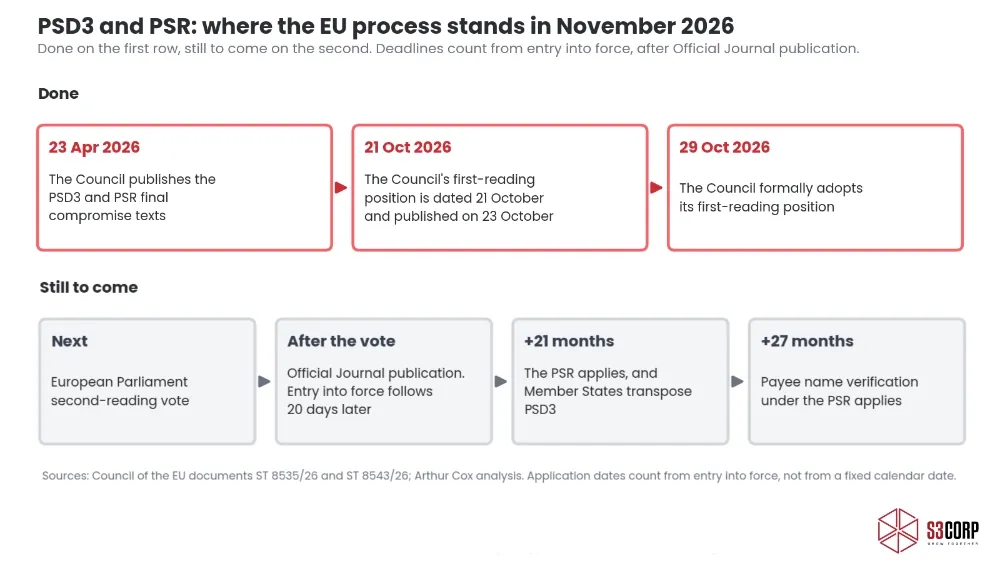
Pay-by-bank teams in the euro area need payee verification now, not after the PSR applies. The Instant Payments Regulation (EU) 2024/886 has required euro-area payment providers to offer it since 9 October 2025. Non-euro Member States follow on 9 July 2027, according to Bird & Bird.
If you plan to ship before year end, mark these dated events on your calendar:
Preparation comes down to four owners. Legal confirms which regime applies and what authorization you need. Security verifies controls and certifications, product designs the consent journey, and engineering plans for API change and outages.
Each checklist below uses yes/no checks. If you answer no, assign an owner and a date.
ISO 27001 and SOC 2 assess your controls, and PCI DSS applies only to cardholder data. None of them replaces authorization.
The decision to build, integrate, or partner is a separate step, and the fintech software development guide covers it in depth. The next section outlines what to weigh first.
Before you build, decide which side of the API you sit on, because open banking API development differs for account providers and for third-party providers. Account providers publish and secure the APIs. Third-party providers consume them and manage consent.
An API-first approach to open banking architecture fits both roles. You define the API contract, the consent model, and the error handling first, then build the product on top. Legacy core banking systems often need an API layer in front, so plan that work early.
Four building blocks recur in open banking software development:
Cost and team structure come next, and the cost to build depends on your route: direct bank connections or an aggregator. Compare both routes in the fintech app development cost breakdown. If your team lacks open banking experience, compare in-house hiring with fintech development outsourcing before you commit.
An open banking API is a standardized, regulated interface that lets a bank share customer-permitted account data and accept payment instructions from authorized third parties. The customer gives consent, and the bank authenticates them. The third party then receives only the data or payment access the customer approved.
It depends on your role and region. Relevant account providers in the EU and all UK providers of online payment accounts must provide access, but the US has no enforceable federal mandate. Fintechs choose whether to join, though regulated activity may need authorization.
PSD2 requires relevant EU account providers to give authorized third parties access to account data and payment initiation, with customer consent and SCA. It created the regulated AIS and PIS roles, which is why banks built dedicated APIs. PSD3 and the PSR remain in the legislative process.
Not in an enforceable way today. The CFPB finalized its Section 1033 rule in October 2024, but a federal court enjoined enforcement while the bureau reconsiders it. Data sharing continues through market-led arrangements, including FDX, so check current status before you rely on any compliance date.
A business uses open banking APIs in one of two ways. It becomes an authorized or registered third-party provider and connects to each bank's API, or it integrates a regulated aggregator that has already done so. Either route needs customer consent, secure authentication, and clear limits on how you use the data.
Start by choosing a route: direct bank connections or an aggregator that covers many banks. Then register as, or partner with, an authorized PIS provider, implement the consent and authentication redirect, and test in a sandbox before you go live. Architecture and security choices depend on the route you pick, and the API development services guide covers the build side.
Aggregators earn revenue from subscriptions, from referrals to partners based on consented data, and from reselling enriched data through an API. Each model needs a clear purpose in your consent text. Your legal team should confirm that the purpose matches the data use.
It depends on the provider and the market. Aggregators price their own services, and in the US the CFPB reopened whether banks may charge for data access. Check the rules and the contract for each route.
Open banking covers payment accounts, such as checking and current accounts. Open finance extends consent-based sharing to savings, investments, pensions, mortgages, and insurance. The EU's FiDA proposal and UK open finance work aim to formalize that expansion, but timelines differ by region and are still moving.
Open banking APIs are a legal obligation for some businesses, a growth channel for others, and an operational risk for both. A strategic approach starts with three questions: what is your role, which jurisdiction governs you, and which rules are enforceable today rather than pending.
With those answers, you can decide how to build or source the capability. S3Corp brings 19+ years of experience, overseas talent, and customized solutions to that decision for global clients.
Ready to move from planning to delivery?